The Water Knot
The Water Knot is an extremely high 'Knot Strength' fishing knot.
It is also great for joining two lines together (see step four). I first encountered this knot when tying Conger traces with 150lb mono but have used it just as effectively with 12oz mono.
The knot is very small and super strong. It is my preferred eyed or spade end hook knot especially for fly fishing and tiny eyed hooks. It is, in my opinion, the strongest hook knot I have come across.
Another useful feature of the Water Knot is that the trimmed end points back up the line. This is excellent when threading baits past the eye of the hook. Lugworm for example. Other knots have the trimmed end the other way around which can damage bait presentation.
Below are four steps to tying the Water Knot...
In this example, I have used 'Sufix Camo Skin' as it shows well for the photographs. It works well for nylon, dacron, backing, braid and most leader lines.
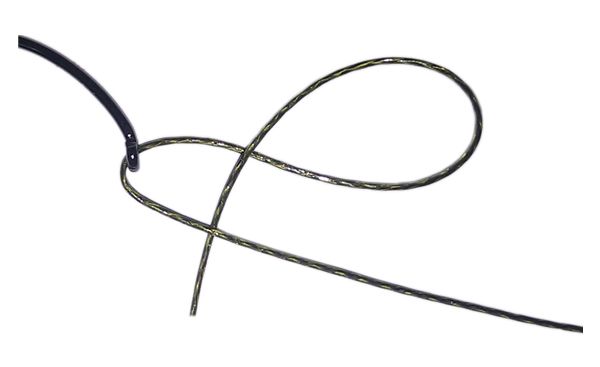
Step 1
Make a loop of line and take the free end back under the hook length.
Step 2
Pass back around the hook length and through the loop you made earlier. Do this 3 to 4 times...
If using braid, make five or six turns. Very thick mono requires only three whilst the thinner mono-filaments require a turn or two more.
Step 3
Carefully draw tight by pulling both the free end and the hook length and the hook itself, sliding the knot gently towards the eye. REMEMBER, if using nylon to moisten with saliva to prevent weakening of the knot...
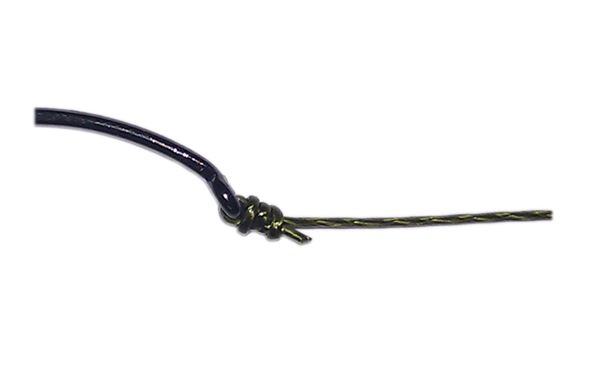
Step 4
Fully tighten and trim off...
This is also a fantastic knot to use when joining line to line. Simply replace the 'hook eye' with a loop from one of the lines you're wishing to join. Once you've made the first knot with the other line (not quite fully tight) make the second with the first looped line. Then fully tighten both knots. Always remember to moisten...
How to Tie the Water Knot, Step by Step